Vacation

The thing about starting a series (like the recent school-planning one) is that life happens.  In our lives, this week and last week we've been on vacation.  So while I haven't been thinking about (or writing about) school-planning, I've been doing a lot of prep for vacation!

Here's a very short recap of our vacation time, with just one photo from each "event":

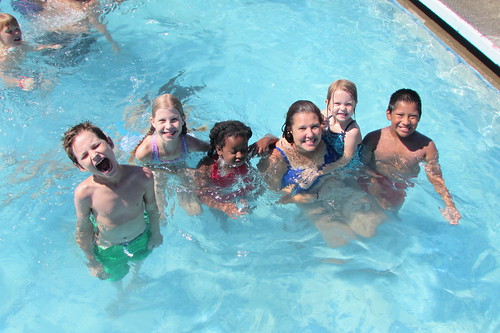
We went to the waterslides.  First time as a family.  I LOVE the waterslides.  I had just as much fun (if not more fun) than the kids did.  :)

IMG_7242

We went to the zoo.

IMG_7350

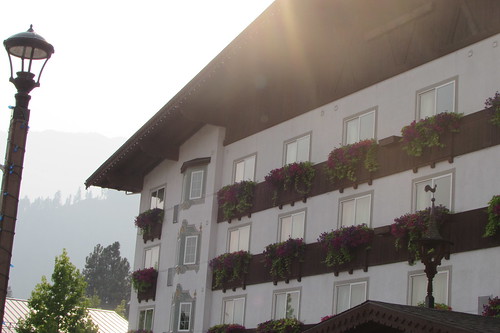
We picked blackberries, canned blackberry jam, went on walks, celebrated Mark's mom's 70th birthday, and then headed to the mountains for three days, where I admired the window boxes of the lodge we stay in,

IMG_7387

we swam at the pool several times, ate out (*love* doing this!) and caught an outdoor performance of Fiddler on the Roof amidst heavy rain and a lightning storm!  Such an adventure.

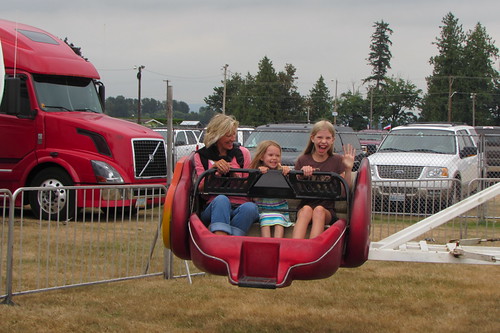
We'd barely gotten home and then it was time to go to the fair, where we ate fair food and the kids got to go on rides.

IMG_7477

Now our vacation is wrapping up and I can get back to school-planning mode.  More of those kinds of posts due up soon.  (Thanks for your patience!)


School Planning 101

I should remind you that I'm a paper and pen kind of a girl.  I know there are whole planning worksheets/guides/printables/programs available for school planning.  I can't link you to them, though, because I don't plan like that.  I need to write it all down and see it.  I need to physically cross things out and add to my lists, whittle them down and then make a fresh (cleaner, shorter) list, add more to that list and then start a whole other list on another page.

I can tell you how I plan.  I've been doing this for seven years now and I definitely have a system.  Here are the first three things I do each year as I plan for the following school year:

1.  Pray.

I can't emphasize this enough.  These are God's kids; this school year belongs to Him, as does every single other one.  He knows what our children need.  Ask Him for wisdom, for clarity about your schedule and curriculum choices, for inspiration, motivation and discipline.  Ask Him to help you with whatever conundrum you're facing as you look ahead to this next school year.

2.  Evaluate your previous school year.

This sounds like a lot of work, I know.  But it doesn't have to be.  Simply think through what worked and what did not work (and why it didn't).  This can be anything from a quickly jotted down list (or a conversation with your husband) to a more complete analysis of each subject.

I like to do this at the end of the year while my thoughts are still fresh.  The way I do this is that I look at our schedule from the previous year and just break it down: what worked (strengths) and what did not work (weaknesses).  When I evaluated our year my list looked like this:
WHAT WORKED? Bible time, narrations, science, dictation, Shakespeare, piano practice, (most) chore assignments, math, school with the little girls, copywork.

WHAT DID NOT WORK? Picture study, geography, poetry, consistently waking up on time.  And sadly: read-aloud (I chose boring titles this year.  It was painful.)

I have some undecided subjects, too.  For devotions we started strong but sort of faltered.   Same for our story time (picture books).  Written narrations were great when we were faithful but we were not consistent.
Even if this is your very first year of homeschooling, you can still do this!  You may not have school subjects to evaluate but you can still examine what is working in your routine.

Note:  I find that the easiest way to add something into our schedule is to tag it on to a routine that is solid in our home.  For us it was as simple as breakfast.  We always ate breakfast together at the start of our day, and we were all in one place.  So I added Bible time after breakfast, then memory work, then we tucked in narrations after the Bible story.  Then after breakfast we decided to do "after-breakfast-chores", etc.  We just built our schedule brick by brick, so to speak.

3.  Print out a calendar.  

IMG_7096

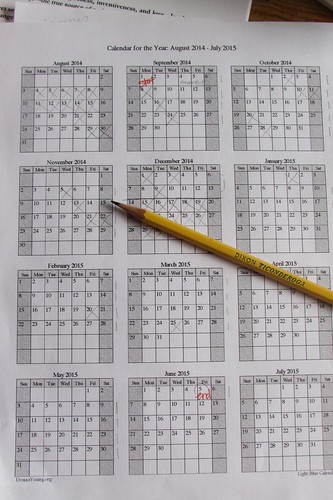
You've got to look at your year as a whole.  (You can go here (donnayoung.org) to view a variety of free, printable calendars.) 

We school for 36 weeks, so I need to look at the calendar to see where we can come up with 36 weeks, first crossing off birthdays and Mark's days off and the entire month of December.  I simply pick a start date and then tally up weeks on the right-hand side of the calendar months until we get to 36 - and, voila!- we have a finish date!

And now I know we only have a couple more weeks to plan for our Sept. 1st start date.  Yikes

Our Simple Schedule: Part 4 (Geography, Science, and Written Narrations)

IMG_6105_2

This is Part 4 (and the final post) in an impromptu series I'm doing in response to a readers question about our schedule.

Here is her question:  
I know this was a while back, but I really love the simplicity of that schedule you shared (the picture in the other post of your school schedule). I'm curious what resources you're using for things like math and dictation (are you using Spelling Wisdom or just choosing something each week, etc.). Anything in particular for Bible, memory, poetry, etc or just choosing as you go? What about geography and science? And, written narrations ... are you just letting Ella choose what she will write from? Thanks so much! You really know how to simplify and make it feel calm (or at least appear that way). :) 
Here is what we've covered so far:
Part 1: Math
Part 2: Dictation and Spelling
Part 3: Bible, memory work, and poetry

And in this post we'll cover geography, science and written narrations.  So.  Geography.  Mark is really much more into geography than I am, so I asked him to make our lesson plan last year.  He made a GREAT one, having the kids draw world maps, label oceans, continents, rivers, mountain ranges, etc.  They loved it.  Then he moved to local geography, then back to each continent for a closer look.

We started well and then faded into nothing.  TOTALLY my fault.  And really more of a management thing- he had the lesson plans on the computer, I never printed it out or had it with me, or I'd look and be confused about what I was supposed to do so we just ended up skipping it a lot of times.  :(  Which just means we'll be doing some repeats this year.  Fine by me.  I plan to be much more organized- everything printed out and ready to go and discussed with him beforehand.

Science.  We've spent years doing only nature study and we love that--  examining things growing and living around us, drawing, labeling, and reading about them.  This past year I thought we should maybe explore other science stuff so I ordered an Apologia book and we did that once per week, in addition to nature study.  I didn't really like the textbook approach, although we all liked the information we learned.  Generally I would look ahead, print out some coloring pages (specific to whatever animals we'd be reading about), and the kids would color while I read aloud.  I'm still undecided about what we'll do this year.  I just ordered this book--


-simply because it seems right up our nature-study-alley, and I thought it might give us some fresh inspiration.  We'll decide soon what science will look like next year, but I'm leaning more toward a nature study approach again.

Written narrations we do once a week- and again, much like dictation, I select a passage from one of our books: whatever we're reading at the time (history, read-aloud, one of the kids' own books, Shakespeare, etc).  I read it aloud ONCE while they listen, and then they summarize it for me in written form.  If there are places or names that are unfamiliar to them, I will put them up on the dry erase board for them.

I am ALWAYS surprised by how much they write.  I expect a paragraph, and they will easily give me a page to a page and a half.  I love reading these narrations.

A written narration requires a bit of time (about half-hour) and little to no interruptions, so honestly?  I skip this more than I'd like to admit, because it's just difficult to have such quiet around here!  But that's how we do it when we do it!

***

Next up:  School Planning 101


Our Simple Schedule, Part 3 (Bible, memory work, poetry)

IMG_6105_2

This is Part 3 in an impromptu series I'm doing in response to a readers question about our schedule.

Here is her question:  
I know this was a while back, but I really love the simplicity of that schedule you shared (the picture in the other post of your school schedule). I'm curious what resources you're using for things like math and dictation (are you using Spelling Wisdom or just choosing something each week, etc.). Anything in particular for Bible, memory, poetry, etc or just choosing as you go? What about geography and science? And, written narrations ... are you just letting Ella choose what she will write from? Thanks so much! You really know how to simplify and make it feel calm (or at least appear that way). :) 
Here is what we've covered so far:
Part 1: our resources for math
Part 2: what we do for dictation.

And in this post we'll cover Bible, memory work and poetry.

IMG_5376For Bible time: Every morning over breakfast we read from Hurlbut's Story of the Bible.  [Another favorite is Catherine Vos' The Child's Story Bible].  About 80% of the time we follow our reading up with a narration: the kids tell it back to me, or I have them draw a picture, or we'll make lists on the dry erase board (observational- listing characteristics of someone, or of God, or of what this or that king did in comparison to another).  Every once in long while I'll have them act a story out, which they love, but which takes a really, really long time.

Mark also reads from the Bible (NIV) in the evenings before bed, before or after our read-aloud.  He started this habit years ago when we only had Ella and Isaac.  Sometimes he only reads a few verses and we talk about it, sometimes he reads a whole chapter.

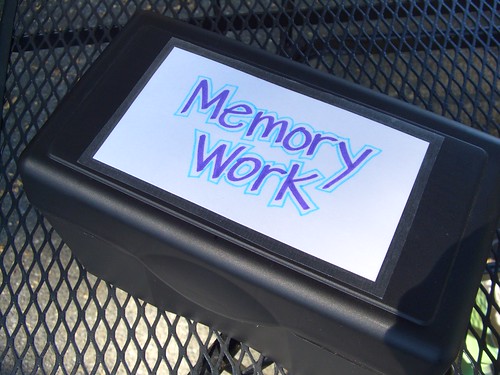
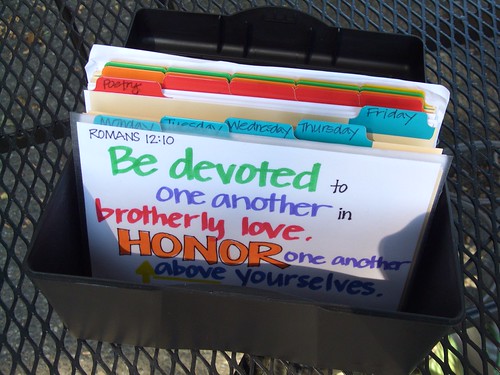
For memory work,  this year I transitioned from our memory work box, which we'd used for years, to binders (shown in this post) for each child containing all of our memory work.  Honestly, I sort of miss our memory work box and I still can't decide which we'll do this coming year.   The box is more portable and practical, and we could easily do it at the table, and it held an all-togetherness factor that I like.

CIMG5743

CIMG5744

The binders made for more copying and more papers.  And while I liked that the kids got to have their very OWN, I think we did it less because we had to move from the table to the living room for memory work.  (Because five open binders at our table, usually with breakfast (or the remains) on our table, is impossible.)

What we did for memory work this year: our Family Ways.  Mark and I used this as a springboard to make our own family ways.  We used many of theirs but tweaked it a bit- adding some different verses, omitting a few and adding some of our own.  So we introduced them week by week and discussed them, and then memorized verses to go with them.  We also memorized Psalm 19.  And we reviewed our previous memory work, listed below:
-ABC Bible verses
-Catechism questions
-OT books of the Bible
-NT books of the Bible
-the Ten Commandments
-assorted Bible verses/passages we've memorized over the years
-a couple of poems

For poetry, what I did last year was to choose one to three poems for each month- specific to the month or season, and tried to read through them at least once each week.  My plan* was that the kids would then choose one poem per quarter that they would then memorize and recite.

*I am really quite good at making plans and systems and thinking they're going to go along swimmingly, right up until they don't.  So while that was my poetry plan, what really happened is that we read the September, October and November poems, and the [3 older] kids each chose a selection from them and memorized them (roughly), and kept asking, "When are we going to recite our poems, mommy?"  And I said, "I don't know.  Let's ask daddy sometime."  Repeat about 20 times over the course of a couple of months. One day I did, finally, ask them to recite them to me.  And they did.

We don't school for the month of December, so no poems.  I also miscarried that month, and we were very sick.  While we began school up again sometime in January, I don't think we ever read the January poems I'd selected.  I read February's poems at least twice, March's poems once or twice, April's poems once, May's poems once, and June's poems never.  

I was bemoaning to Mark the other night that we would have gotten far more poetry done if I would have just chosen a book, set it somewhere close to our kitchen table, and picked it up and read from it each day.  

Next up: Part 4: Geography, Science and Written Narrations.  Then I'm going to write a few posts on how I plan for our upcoming school year, since that's what I'm doing these days.

Our Simple Schedule, Part 2 (Dictation and Spelling)

IMG_6105_2

This is Part 2 in an impromptu series I'm doing in response to a readers question about our schedule.

Here is her question:  
I know this was a while back, but I really love the simplicity of that schedule you shared (the picture in the other post of your school schedule). I'm curious what resources you're using for things like math and dictation (are you using Spelling Wisdom or just choosing something each week, etc.). Anything in particular for Bible, memory, poetry, etc or just choosing as you go? What about geography and science? And, written narrations ... are you just letting Ella choose what she will write from? Thanks so much! You really know how to simplify and make it feel calm (or at least appear that way). :) 
I already discussed the resources we use for math in Part 1.

For dictation,  (Have I not shared how we do dictation here on the blog?  I feel like I've written a whole post on this very thing but I can't seem to find it anywhere!)

I am entirely indebted to Linda Fay for the way we do dictation.  She has several posts on dictation, and they can be found here.

This method of dictation is the way we teach spelling and grammar in our home.  It's also great handwriting practice!  We do this once a week.  And both of my children are excellent spellers.

Here is what I do with my two oldest (12 & 10):

1. Choose a book

I grab a book-- something we are currently reading, whether it be a read-aloud, a history book, or one of the books they are reading from their assigned reading list-- and choose a short paragraph or a few sentences and point it out to them.  I intentionally choose a passage that has words they may not know how to spell, or something with dialogue or interesting punctuation.


2. Child studies the passage you've selected (x2) 

Their first read-through is for spelling.  They study the passage, looking for words that are unfamiliar to them.  Then they tell me the words they're unsure of, and I write them on the board.  They study those words, one by one, until they can close their eyes and "write" (spell) the word in the air.  When they're confident with that word, I erase the word from the board and they move on to the next one.  When there are no more words on the board, we move on.  This can take several minutes (which means you can be helping younger kids with something, loading the dishwasher, or doing meal-prep).

They read through the passage for a second time, looking closely at the punctuation.  This usually doesn't take long.  When they are ready to begin, we move on.


3. Dictate the passage slowly
I take the book and slowly dictate the (now familiar) passage to them- three to five words at a time, pausing while they write.  This step requires patience from me.  :)  I try to have something nearby at the table that I can be working on while they write.


4. Child corrects him/herself
Then they correct their own work, by taking the book and checking their work to the passage.  This is their favorite part!  They each have red pens and white out and they go to town, or take great pride in having a perfect dictation. 


Other notes/tips: 

- Sometimes I choose the same passage for both of my kids (to save time), and sometimes we do it separately.  It just depends on how much time we have.

- I have found that writing is much more painstaking for my son than for my daughter.  So the key here is quality, not quantity.  Start small.  Choose one sentence with one or two challenging words, and build from there.

- They also love to correct each others' work!

- My 9-yr-old son is still very much working on proper letter formation and spacing, and writing does not come easily for him.  At all.  For these reasons, he does not do dictation yet.  He and I are going through All About Spelling, for a season, until he is up to speed and can start short dictation lessons.  I think All About Spelling is an excellent program and works great for him because of its multi-sensory approach.


Coming up in Part 3: Bible, Memory work and Poetry.

Our Simple Schedule, Part 1 (Math)

A reader recently left a comment in a post from March about homeschooling.  I'm going to share her comment with you, and then reply to by way of a series of posts.  I figured that's better than taking up a bunch of space in the comment box of an old post, and maybe it will be of interest to others, too.

Here's her comment:

I know this was a while back, but I really love the simplicity of that schedule you shared (the picture in the other post of your school schedule). I'm curious what resources you're using for things like math and dictation (are you using Spelling Wisdom or just choosing something each week, etc.). Anything in particular for Bible, memory, poetry, etc or just choosing as you go? What about geography and science? And, written narrations ... are you just letting Ella choose what she will write from? Thanks so much! You really know how to simplify and make it feel calm (or at least appear that way). :)

Here is the schedule she's referring to:

IMG_6105_2

Okay, first up- resources for math:  After waffling in three different math curriculums, for three different kids, over the course of a few years, this past year we made the brilliant decision to stick to just one.  Mark and I chose the one we thought was the most comprehensive, and each of our kids is doing Rod & Staff.  We purchase the student books and the teacher manual and we pick and choose problems from each lesson for the kids to do.  Rod & Staff is a very thorough math curriculum, and each lesson incorporates review/drill work from previous lessons, so while we do some review and drill work, we do NOT do every problem.  It would simply be too much.  PLUS: We do Charlotte Mason's 20-minute lessons, remember?  (I talked a little bit about that in this post.)  So I set the timer, they work diligently until the timer goes off, and then we close the math books.

We also incorporate flash cards.  And occasionally-- just to change things up-- we'll do either math drills or this fun math game.

Next up I'll talk about Dictation.

Staying in one place

IMG_7060

I took this photo two nights ago in our back yard.  The sun was going down, and we were watering our flower beds, setting up the sprinkler just so, leaving it for awhile only to move it again.  I looked around at our yard as I often do and I was grateful.

I've always had a desire for some land in the county- one with an old farmhouse and tall trees, the space for a jersey cow and chickens and room for the kids to explore.  I can see it in my mind, that place. 

And yet, we stay in our little home here in the city.  And I am grateful and content.  And the longer we stay, the more I feel that way.

I look around our yard, and everything has a story. 

IMG_7006

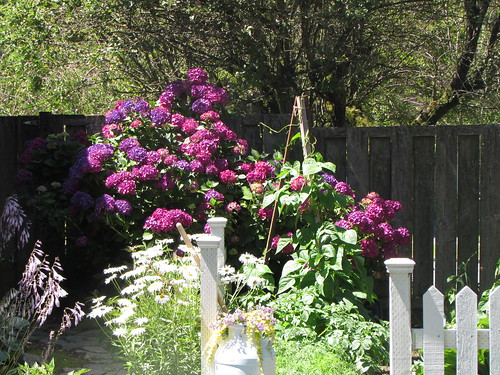
By the garden, there, is that big purplish hydrangea.  It came to me by way of a gift from Mark, so many years ago.  When he brought it home to me, it was a small potted hydrangea he'd picked up at the grocery store, the kind with the foil-colored wrapping around the base.  It was blue when he bought it.  And Mark planted it here on the inside of our fence, by the garden, and we have watched it grow and change color.  Now it is huge, and it graces us with blooms in these summer months.

There's our little side garden which was a family project, laying the rock pathway and planting perennials alongside of it.  And there, too-- my bird bath- a Mother's Day gift from Mark and the kids.

There is my picket fence, bordering our garden, that Mark lovingly put in for me last year.

Along the fence are the raspberries we planted there, scraggly at first, but now giving us containers-full of raspberries every day.

Back by the garage is the lilac tree we planted, right next to our camellia.  My friend Amy bought us a small camellia plant several years ago when we were struggling with infertility.  It was a gesture of love and of hope, and when it blooms each year I remember that season of our lives and that friendship.  That camellia shrub is now full and tall and vibrant, and I get to see my children run past it every day in their backyard play, and I am reminded of the faithfulness of God. 

Back by the swing set, there, is the place where the big old apple tree used to stand.  We loved that old tree, and the first few years we lived here we filled up boxes of apples from that tree.

There is the playhouse whose bottom floor we converted into a chicken coop, the ladder and deck and slide we built for the kids with the help of Mark's parents.  There is the fence we put up with the kids bordering the alley- another big family project.  Everything has a story.

IMG_7063

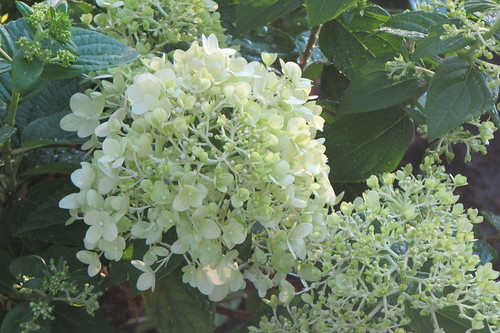
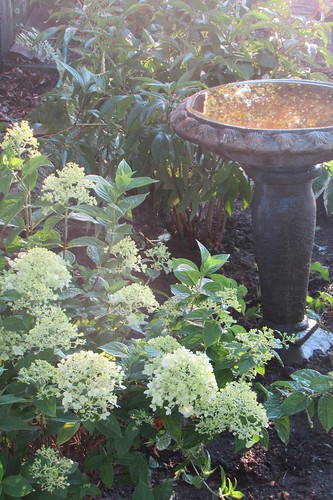
This new hydrangea has its own story.  It's a gift from my parents that will stand as a memory of the loss of our babies.  Mark planted it there by the bird bath and it is beautiful.  And each time I look at it I will remember.

As Mark and I sat in the yard the other night and watched the birds flock to the bird bath, I thought, not for the first time: How could we ever leave this place?  I don't know that we will.  I love it so much and there is something so precious about staying in one place, investing in this one place, seeing things change and grow and being here for that.