On a Monday morning


I'm just back from an early-morning walk with my mom and the sky is clear and blue.  And Mark has the day off.  I'm thankful.  I have a hunch we'll spend most of the day outside in the yard, "puttering", as Mark calls it.  Seeing what needs to be done and doing it, then moving on to something else that needs to be done.  The kids will play around, too- and usually we'll enlist the older kids to help with something, and they truly enjoy doing it.

Last night we heard the peeps of baby birds in Ella's birdhouse! 
 

Our rhubarb is flourishing and I'm trying to keep up with it. Yesterday I baked some Rhubarb Pound Cake- and it was delicious, as always.  Last week we made some rhubarb muffins using SouleMama's Leftover Oatmeal muffins recipe (tucked at the bottom of that post).  I just pulled a stalk, diced it and cooked it down a bit before using it in place of the "1/2 cup extra 'somethings'" part of the recipe.  They were yummy.  This week I plan to make some rhubarb crisp.  Mmm!

We lost a chicken a few days ago.  Summer.  We have no idea what happened~ just that we found her- dead, in the coop.  She had no wounds and there had been no signs of illness.  The kids were sad and we will all miss her.  She was a sweet hen.  Mark buried her in our back yard.


Ella took several close-up photos of Summer last week and now she's so glad she did.

Last week I was blessed by the prayer tagged onto the end of this: 

Our son had been rude and bully-ish to his little sister, so I had him copy a verse, 3x- that I'd written on the board: Let all that you do be done in love.  Then I asked him to write out a prayer with that verse in mind- about his relationship with his sister.  He wrote:

Der God, 
I pa that you wod help me be loven to Adelia and you wod hilp me hav self cincstl. 
In Jesus nam
Amin.

The teacher in me sees lots of room for growth, obviously- in his sounding out skills, spacing, grammar, and spelling.  But the mother in me is blessed by his heartfelt prayer, and the words he used in it.  And I trust in the God who sees this prayer and who has tucked this verse inside my son's heart.

I hope you have a wonderful day!
~Stacy

"Live at home"


"Learn to do common things uncommonly well; we must always keep in mind that anything that helps fill the dinner pail is valuable."  - George Washington Carver


During the night I dreamed about our vegetable garden.  That's probably because last night I was poring over our garden plans and reading up about each item in this book:


--which is a great resource and one I go back to, again and again.  I've added a few more things to our list: nasturtiums (did you know that the entire plant- flower and all- is edible?)  And they're pretty.  (those leaves!  and the colors!  love them.)

{photo from here}
I'm also considering garlic (is it too late to plant this?  Anyone know?  It's still relatively cold here.) and tomatillos.  (Apparently they're fairly prolific and grow well in cooler climates.)

I'm making note of what I hope to preserve this year, too.

For the freezer:
I'm hoping to make strawberry jam, strawberry-rhubarb jam, raspberry jam and blackberry jam.  Possibly blueberry jam, too.  I'm not a big fan but I'm sure some of the kids will eat it.  (I'm trying to remember how many batches of jam I made last year but I forget.  Somewhere around 10 batches, I think.  And we just pulled our last jar from the freezer.)  And applesauce.  I will likely can some applesauce, too.  We're planting sugar pumpkins for the purpose of making and freezing some pumpkin puree.

To can:
We always can beans- and we never can enough.  So we're planting both pole and bush beans this year in hopes for a large crop.  We also want to can dilly beans this year, too.  I want to can salsa- it's been a few years and I'd love to do it again.  And dill pickles

***


One of the biographies Mark read aloud this year was George Washington Carver.  Carver (1864-1943) was a brilliant scientist who defied people's expectations of him- because he was a black man.  He had been born into slavery and was not allowed to attend public school but he yearned for an education and had an insatiable appetite for learning.  Even as a young boy, his neighbors called him the Plant Doctor.  He knew plants.  Every morning by 4:00, he went for a walk in nature and to spend time with his Creator, and he studied whatever he saw.  He dug up plants and studied them and wondered at their purposes. He studied the soil.  If he came upon someone working at a skill that he was unfamiliar with, he asked if he could learn.  In 1896, Booker T. Washington invited Carver to come to the Tuskagee Institute and head up the Agricultural Department.  (By this time Carver had collected several thousands of specimens and understood soils, grafting, and cross-breeding.) 

Carver was devoted to his agricultural students, but he had great compassion for the poor black cotton farmers in the area.  He saw the miserable conditions in which these farmers lived- in broken-down shacks, with no nearby trees or flowers or anything planted nearby- other than cotton- and he wanted to reach out to them and help.  Their whole life was cotton, and yet he soil was poor.  Carver knew how to bring health back to the soil.  He came up with the idea to create an Agricultural Experiment Station at Tuskagee, in order to show the farmers what could be done on the worn-out soil.  He came up with ways to treat the soil that would be available to the farmers, he printed bulletins and recipes.  Then he realized that the farmers weren't going to be reading the materials, so he started a Farmer's Institute, where he invited the farmers and their wives to come- once a month- and SEE what they could do.  He told them in simple language how they could work their land more effectively. 

He happened upon an old black farmer one day- Henry Baker- and was invited in for a meal.   They ate a typical meal: side meat, corn bread and molasses.  Carver noted that there were no vegetables or proteins.  They ate the fat of the pork instead of real meat.  There were no eggs.  He began sharing with them how they could 'live at home'; that the growing season in the south was long, and they could plant a garden and have fresh vegetables, year round.  He offered to bring them some seeds.  He told them they could raise peaches and pears and cherries and persimmons, berry bushes and walnuts and pecans.  He told them to get some chickens.  He told them he'd bring them a coop himself and teach them what to do.  As he was leaving, Henry Baker said, "I want to thank you, Professor, for your kindness.  I is just one farmer, and you done took all that time telling me how I should live.  But Professor, I got neighbors that's worse off than I is.  I owns my land.  They just rents it.  If you tell me when you're going to bring them seeds and that chicken coop, I'll get my neighbors here.  And you can tell them all about how it ain't good for the land to grow just one thing all the time- and about 'live at home'."  Carver promised to come the following Saturday, and told Henry to invite the farmers' wives, too. 

Carver spent all that week cooking and showed up that Saturday with a big wooden box full of jams, eggs, cured meat, vegetables, and packets of seeds.  Twenty farmers and their wives were crammed into Henry Baker's cabin and they listened to Carver tell them about the land.  They sampled all he'd brought for them.  He showed them how to raise hens and told them about curing meat.  He taught them how to make things.  "'Live at home'", Carver told them, "Don't buy everything you need at the plantation owner's store.  Grow your own food.  A garden is the best doctor there is."  Then he gave each man some garden seeds and some flower seeds. 

There's much more to his life story, but we were inspired by his vision to 'live at home'.  On our little city lot there's only so much we can do, but we can use the land God has given us, and be good stewards of it.

After reading that biography, Mark and I encouraged each of our (older) kids to choose just one crop (from our yard and garden) this year to oversee: to read up about it, to study it, to plant it, tend it, weed and harvest it.  I told them that I would then buy from them what I would normally purchase from the store.  So as I plan for our garden this spring, they are busy plotting and planning, too.  Isaac intends to take over the cucumbers, and to plant dill and make dill pickles- and sell them to me.  Ella is researching carrots.  Isaias is still contemplating what he'll take on. 

We'll see how our little project turns out.  :)


Planning for next year

I had an hour in a coffee shop all by myself the other day and I used it to begin a list in my journal in regards to school for next year.  Before the list-making, I prayed that God would lead us, that He would order our steps and make my time effective; that I wouldn't plan or invest time in what we won't end up doing.  I prayed that He would give me wisdom to discern what we can do, what will work for us, and what is important.  I prayed that He would reveal His desires for our school year to me and that He would show me where we can grow and how we can manage our time better.

Then I began jotting things down, focusing on what we missed this past year (or did too little of or things I just want to do more of) and what I see as growth areas for us.

Here is the list I made, with any notes in italics with further explanations:

-picture study  We made it through exactly ONE artist this year, to my chagrin.  This is due to poor planning on my part.
-classical music/composer study
-nature study/science  I'm ordering some Apologia for next year.
-narration  We do a lot of informal narrations, and Ella and I worked on written narrations once a week, but I want to continue to grow in this with all the kidsIt's one of my goals to read up on this in our off-season and get re-inspired.  *Any and all narration tips welcome.  :)
-read-alouds (more reading with little girls); and be more purposeful in choosing books.  I've found this year that a lot of the books in our book bin are our history-related picture books, which aren't of particular interest to the girls.  We own many wonderful books and I just need to put them out.
-more directive time w/ our history read-alouds: discussion, projects
-memory work and retention  Especially retention.  I'm contemplating this system or something like this.
-prep ahead of time: any coloring pages for the kids to color during our reading time
-devotions- work on developing habits for the older kids to be reading the Bible on their own
-handiwork diligence (for Ella)- to see a project through to completion
-Shakespeare
-piano practice- (for Ella)- move to earlier in the day
-Ella- girlhood stuff  I've been perusing this book and trying to figure out how to work some of that into Ella's schooling next year.
-compile a list of classics with Mark that we'd like the kids to read before they leave our home
-read inspiring books myself: good literature/classics and homeschooling encouragement.  Right now I'm reading both A Thomas Jefferson Education and A Charlotte Mason Companion (both excellent!) and have been reminded again how important it is for me to read books that encourage and inspire me in the education of my children.
-compile assigned reading lists for Isaias
-schedule less read-alouds for me to get through with the kids- Now that we're nearing the end of our school year I'm realizing that I have way too many history read-alouds to get through.  Better to schedule less and then add on as we go.

So that's the list.  This list will surely be added onto and then eventually will morph into another list, than another... and eventually it will become a TO DO list that I'll start checking off.  Mark and I already had a long conversation about the above list, me sharing with him what I see as our growth areas and asking him to think and pray about these things with me [and help me find solutions!]

* * *

Regarding one of those list items, read inspiring books myselfI would love to hear some of your favorites.  Many of you who read here are also homeschooling mothers.  Are there books that you keep going back to for homeschooling inspiration or encouragement?  Also, what books do you recommend for young moms who are either newly considering homeschooling or beginning their homeschooling journey?  Let's get a good list going in the comments.  I know there are readers who would appreciate this!

2013 Garden plans

Here's a list of what we're planting (or tending*) this spring:

sunflowers
sweet peas
  
strawberries* ~also planting an additional bed of strawberries
apples*
blueberries*
raspberries*
rhubarb*
lettuce ~a variety
carrots
cucumbers
dill ~& other herbs (I haven't decided which herbs yet, other than dill.)  Any suggestions/favorites?  This will be my fourth try for an herb garden and only one of my previous three years was a success. 

peas
beans
squash ~butternut & spaghetti
pumpkins 

Now, for some "before" photos:

Our garden space.  (That giant hole was dug by Ella and Isaac for compost.)


That's our old strawberry bed on the left.  We're going to use that old window frame as a raised bed for the new strawberries.


Happy, hearty rhubarb plants.

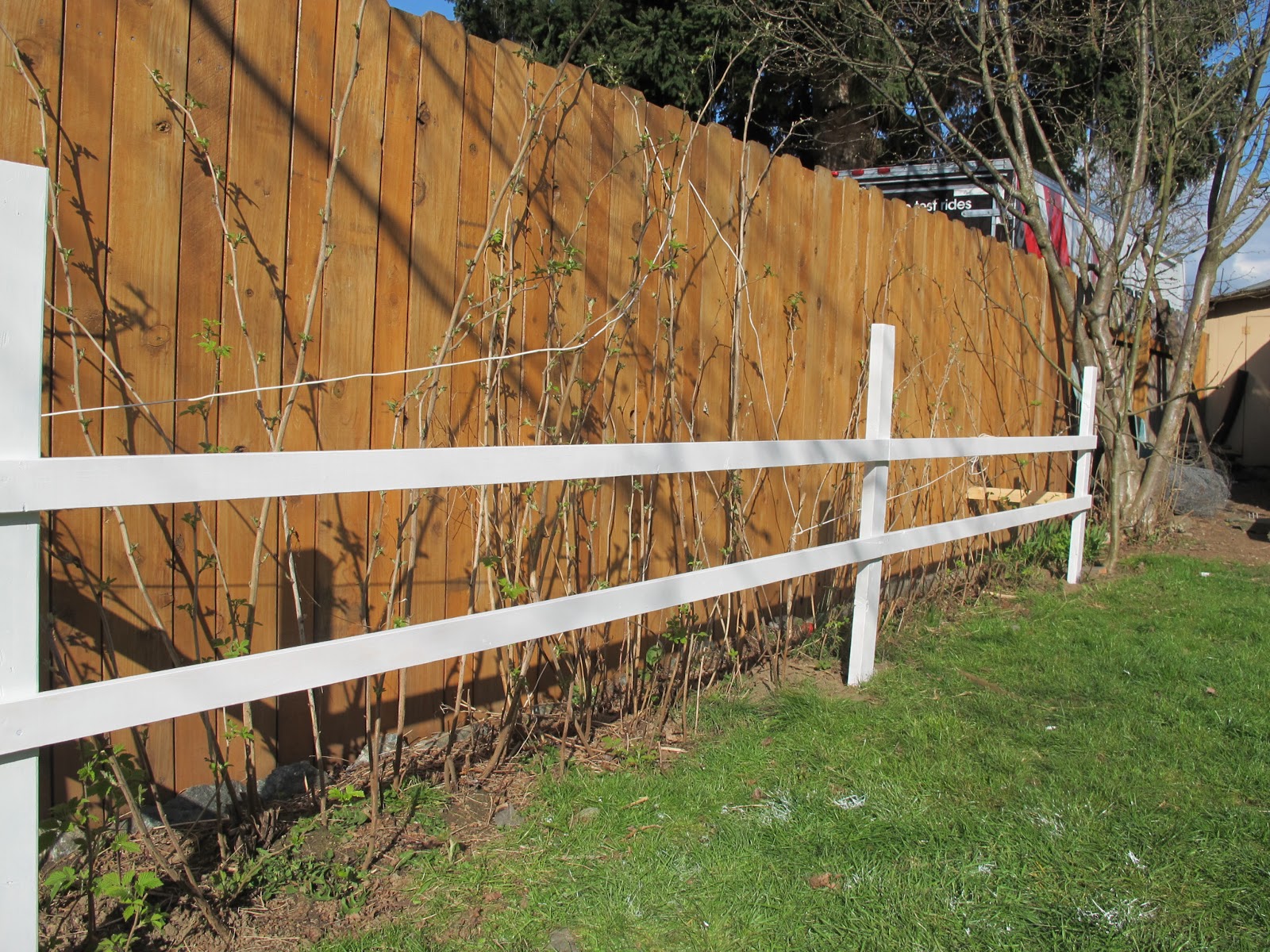
Some of our raspberriesMark just built that fence to keep them back.  The kids are painting it.

Blueberries (two of our four plants)

More raspberries (and fencing materials for Mark to put up more fencing in those two spots.)
My plan this year is to begin a garden notebook for our family, where we'll record what we planted (varieties), and where- and how it fared and what we observed and learned and should have done differently.  Then we can look back at planning/planting time next year and learn from our previous years' experiences.


Exodus wonders

Yesterday I was reading in Exodus- where Moses is asking Pharaoh to let the Israelites go, and Pharoah says no again and again.  Or he says yes, sometimes- but then as soon as the plague is lifted, his heart is hardened and he says no. 

God sends all these plagues: the water in Egypt turns to blood, He sends frogs and gnats and flies to cover the land, He brings a plague onto the livestock of the Egyptians, He causes boils to break out on the people and animals, and more.   Throughout these chapters is the phrase "the Lord hardened Pharaoh's heart and he would not listen", or "he and his officials hardened their hearts", or "he hardened his heart and would not listen".

In chapter 9 we read that God tells Pharaoh: "I have raised you up for this very purpose, that I might show you my power and that my name might be proclaimed in all the earth."

Then in chapter 10, after several plagues- the Lord says to Moses:

"Go to Pharaoh, for I have hardened his heart and the hearts of his officials so that I may perform these miraculous signs of mine among them that you may tell your children and grandchildren how I dealt harshly with the Egyptians and how I performed my signs among them, and that you may know that I am the LORD."

Pharaoh was raised up by God for "this very purpose"- he, in his unbelief and hardening of heart, was used by God in order to show God's greatness. 

His heart was hardened by God so that God could perform all of those miraculous signs; because God wanted to show what He was able to do, because this would be a better story for people to pass on to their children and grandchildren. 

How amazing is that?   I just love it that while God could have caused Pharaoh to say yes right away and let the Israelites go already, He chose instead to create this grand drama with suspense, complete with all these signs and wonders so that our kids get to hear this story and marvel at the power and greatness of God.  I love the way God works!  

And this is such a FUN story to tell them, too- my kids love to imagine Aaron's staff-turned-to-snake swallowing up all the snakes of the magicians, and what it would be like to have flies everywhere and in everything.  All of it- it's ripe for the minds of our children.  I love having the privilege of getting to tell them!


Our chickens

Thankful, today, for our backyard flock of chickens.  I really like our chickens.  We've been keeping chickens for seven years now, and I still really like them.  :)  And it's still exciting to discover eggs in the nesting boxes.

nesting boxes

Spied in the nesting box this morning.  This is Summer, doing her part to provide us with these:


These photos make me thankful for our various breeds which give us the different colored eggs.  It was Mark's idea this last year to get some Ameraucanas (for the sole purpose of getting those pretty blue and green eggs.)  I'm glad he did.  Our Welsummer ("Summer", up there in the nesting box) lays the darker brown eggs


and our Rhode Island Reds, (Plymouth) Barred Rocks, Australorps, and Buff Orpingtons lay the lighter brown eggs.  We have a white egg-layer, too- Millie- (I forget what breed she is.  Mark would remember) but she has decided to take a break for awhile.

Our hens really slow down in their laying-egg habits during the shorter days of winter, so it's always exciting when the days get longer and we get more eggs.

Have you written your sponsored child lately?

I love Compassion International.

Recently a woman at our church shared with me about her visit to a Compassion project on a recent trip she took to India.  She was not familiar with Compassion at all when she went, but she came back enthusiastic about the program and ministry of Compassion.  She was so impressed with the children, the staff, and the curriculum they use to share the gospel.

As I heard her tell of her experience and impressions, I was again reminded to write letters to the children we sponsor through Compassion.
If I can share just one more thing, it is to tell you how important your letters are.  There are days when some children get letters and others don't, and it is hard to explain.
-from a Compassion partnership facilitator in India
I have heard that so many times- and I know it's true: our communication with our sponsored children is so important to them.  We pray for them, but I want to also be faithful in writing to them.  I confess I'm not very good at doing so.

There is one thing I've done in order to make correspondence easier, and it has helped considerably.  I've put together a Compassion binder containing the following:

one of our tabbed sections.  following this are each of their letters to us.

- tabbed sections for each of our Compassion children, beginning with photos of them and information about their country
- their letters to us in the order received
- rough drafts or notes of our letters to them (so that I remember what we've written to each)
- a list of ideas of what to write about
- a list of items that can be sent
- blank paper (and the stationery & envelopes Compassion provides) for writing

the front of our Compassion binder

On the front of the binder I have a Correspondence Record where I note when we've sent letters and what we've enclosed with those letters.  Most of the time I send pictures that our kids have drawn especially for them, and we send photos of our family whenever we have a current one to send.

Other things we've sent:

In October we pressed leaves between clear contact paper and sent those.  One of our sponsored boys wants to be a policeman when he grows up, so recently we sent him a coloring page of a police car.   We've sent stickers.  Today I sent Hello Kitty Band-aids to our three girls.

I prayed today that God would give me the discipline to write to our sponsored children more regularly, and that He would give me the words to say that might encourage them and show them our (and His!) love for them.

One of our little five-year-old boys has a 95-minute walk to get to the nearest Compassion child development center, and he goes: twice a week.  Isn't that such a testimony of what Compassion has to offer? - that it is worth a 95-minute walk for a tiny boy?  Twice in a week?

If you've never sponsored a child, I encourage you to do so!