Showing posts with label Charlotte Mason. Show all posts

Evaluating our School Year: Plutarch

This post is part of a series I'm doing as a way to evaluate our school year. I am covering each subject, describing what we did; what worked for us and what didn't work; and detailing any changes I plan to make. I find this process so helpful as I finish out our year and before I begin to plan for our next year.  (I realize many of you have started school already and are beyond this point, as am I, but it's taken me longer than I thought to finish this series, and I'm determined to finish!)


Plutarch
I'm guessing a lot of my readers don't know who Plutarch is.  No worries.  I didn't either, until I started seeing Plutarch show up on the schedules at Ambleside.  That was two years ago.  I looked at it, read a bit of it, said "Nope." and skipped it for the year.  

Last year I looked at it again, read a bit of it, and thought, "Well.  There are study guides.  And we could try it."  So this past year was our first year to tackle Plutarch.  

As to who he is?  Plutarch was a biographer who lived from 46-120 AD.  Basically he wrote about the lives of the famous Greeks and Romans.  


WHAT WE DO:
Last year we made it through ONE life:  Marcus Crassus.  

I printed out the text and Anne White's study notes (found HERE), and we slooooowly made our way through it.  Once a week, I pulled the pages out and I'd read a paragraph.  After reading, I would call on one of the older kids to narrate it back to me.  (If they looked confused, I would try to narrate it.)  We might do another two or three paragraphs, depending on how well it was going.  Sometimes my kids drew as I read-- sketching out a scene as I was reading-- but mostly we all had to work hard to listen.

Plutarch isn't easy reading by any means.  And that's actually one of the reasons I pressed on.  It's satisfying to have to work really hard at understanding something and then to GET IT.  Also, my boys, especially, really liked it.  (There were battles and vying for power and big egos and they dig that kind of thing.)  Charlotte Mason said:
Plutarch's Lives, . . . I think, stand alone in literature as teaching that a man is part of the State, that his business is to be of service to the State, but that the value of his service depends upon his personal character."
Yes, that.  That is the final reason we pressed on and will continue with Plutarch.  As we read through the life of Marcus Crassus, we were introduced to the character (or lack thereof) of the man.  We would read about a decision he made and discuss: Why did he made that choice?  Was there wisdom in that decision?  What was his motivation?  What do YOU think you would have done?  Valuable discussions took place as we examined his life and leadership.  
We began another life at the tail end of last year, and will continue it for this year.  Slowly and steadily, once a week.  

Evaluating our School Year: Nature Study

This post is part of a series I'm doing as a way to evaluate our school year. I am covering each subject, describing what we did; what worked for us and what didn't work; and detailing any changes I plan to make. I find this process so helpful as I finish out our year and before I begin to plan for our next year.  (I realize many of you have started school already and are beyond this point, as am I, but it's taken me longer than I thought to finish this series, and I'm determined to finish!)

~

If you're just joining us for this series, so far these are the topics I've covered:
Poetry
Bible Time
Prayer
Memory Work [with links to all other memory work posts]
Hymns
Picture Study
Composer Study
Shakespeare
~
  
Nature Study
The birdfeeder right outside our kitchen window that gets lots of visitors


WHAT WE DO:
We have done a lot of Nature Study over the years, [<<clicking on that link will take you to other posts I've written on the topic] but this past year was not one of those years.  *grimace*

This is why: It always feels like such a monumental task to me.  It takes a big chunk of time-- to get all five kids out the door for a walk, plus the journals and pencils and paints, and then the question of where to actually go, and then to time it "right" with either the weather or our schedule or both...?  It just feels so BIG and wearisome.


When it appeared on the schedule this past year, I often thought, "Ugh.  That will take hours, and then we won't be able to get to A, B and C that still await on the schedule...."  As if it's taking away time from doing "real school".  So I frequently skipped it. 

Or occasionally I did this:  "Everyone, head outside with your nature journals.  Find something in the yard to draw!"  But it was a half-hearted effort, and by the end of the year I had dropped it from the schedule entirely.
An injured bird we took care of in the house for a day.


Here's the thing: the kids noticed.  They missed it.  They actually LOVE the walks, observing and discovering new things.  It's one of their favorite things.  Perhaps in part due to the fact that we have spent other years focusing on Nature Study, they love God's creation, and they truly take great delight in it.  Ella has spent a good deal of her late-summer hours, collecting seeds, labeling them and setting them aside for next year's planting.  She is my gardener extraordinaire, and knows a good deal about all the things growing and moving in our yard and garden.  Isaac is often outside, watching the ants, the spiders or some other creature.  He learns a fact about any thing, and he remembers it.  He's like a little encyclopedia.  Isaias is interested in everything; how it grows; how it changes.  He is naturally curious about it all.  Adelia wants no part in any of it. ;)  She may get out the door, but then she'll groan and moan about not wanting to do this.  Audra is just as fascinated with bugs and spiders as the boys are, and has containers everywhere of things she has collected.  And she wants to draw everything in sight.  I forget that Nature Study is a worthy pursuit; that it is something in our schedule that causes us to pause and marvel at all that God has created.

CHANGES FOR NEXT YEAR:
I have this idea that we are going to devote one day a week to just this.  And block out several hours to make this happen.  This will be hard for me.  Generally I have bread rising or dinner in the works or Things To Do That Seem More Important.  BUT.  It is important.  And my kids love it.  And it is good for ALL OF US to get out of the house and explore God's creation.  So that's the plan.  We'll see if this happens, or how often it happens.

Ella, holding a bird that had a broken wing or foot (I forget which)

Evaluating our School Year: Shakespeare


This post is part of a series I'm doing as a way to evaluate our school year.  I am covering each subject, describing what we did; what worked for us and what didn't work; and detailing any changes I plan to make.  I find this process so helpful as I finish out our year and before I begin to plan for our next year.  
~

Shakespeare
I was won over to the idea of studying Shakespeare with my kids, years ago- after reading Linda Fay's post called What's So Great About Shakespeare?  I was mainly fascinated with how many words and phrases Shakespeare added to the English language.

However, I personally felt inadequate to teach Shakespeare, seeing as how I've only ever read three plays: Hamlet, Macbeth, and King Lear-- eons ago, back in high school.  I got through them only because I had Cliff notes and I had no appreciation for the plays at all.

(Also, doesn't it always sounds so hoity-toity to mention to anyone that you're studying Shakespeare in your homeschool?)  So I had an aversion to that, too.  But I decided to give it a try, and I am now so glad I did.  We all really like Shakespeare.

NOTE: Everything we do is what I gleaned from Linda's blog years ago, so truly none of the following ideas are original to me.  


WHAT WE DO:
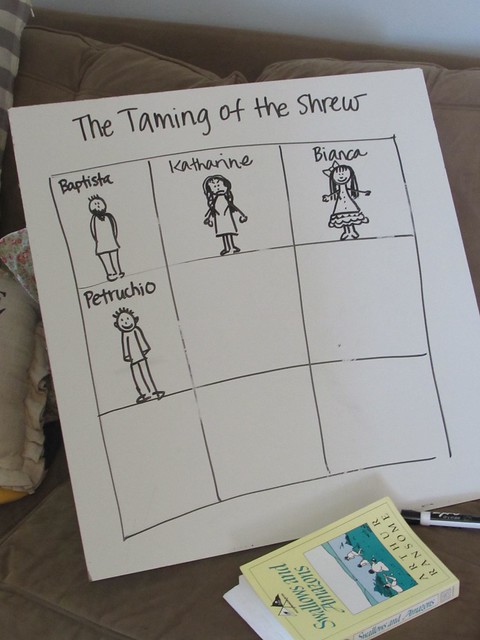
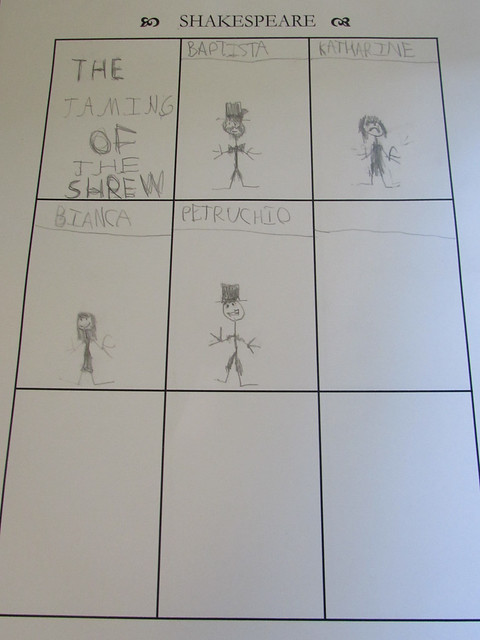
I give each of the kids a 3x3 grid.  You can easily have the kids draw out their own grids, but I have a document that I just print out each time.  (You'll see those in the following photos.)

I draw up my own grid on a dry erase board:

Or, on Mark's day off, he does:
 
WHATEVER.  Totally one-upping me with his fancy drawings.  Look at that king!  (No, it was actually really fun for me to come home to this ^ the first time he did Shakespeare with the kids on his day off, because he obviously ROCKED it, and I was so proud.)

Isaias'
As each character is introduced, we all take time to draw that character, assigning one character per box.  We've done this for years and it really helps us all keep track of the characters.  If needed, we can add notes or drawings in the appropriate box as a particular character's story progresses.

Gracious! This makes me happy.  This is Adelia's, from a couple of years ago.
I read aloud, pausing with each new character for maybe 3-5 minutes to give us all time to sketch.  [Some of my children want their drawings *just so*, so I often will encourage those children to perfect their drawings a bit more later so that the rest of us can move along.]

Audra's
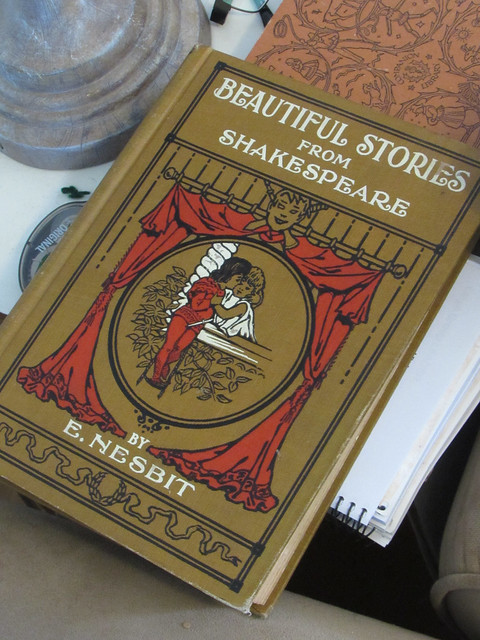
 I used to read from Nesbit's Beautiful Stories From Shakespeare, but I've since switched to Charles and Mary Lamb's Tales from Shakespeare
Isaac's
We may do 3-5 characters each reading, and we rarely finish an entire play in one sitting. The following week, I have the kids pull out their papers and narrate back to me what has happened.  The grid format helps with this, because I can call on a child, pick a character, and say, "Tell me what you remember about _________."  And then choose another character for the next child.

Ella's
I pull out my dry erase board again and we continue reading, filling in more characters as we come to them.  We continue on in this way for 2-3 weeks, usually, until we're through a play.

Example: Here is week two of King Lear, so my drawings have been added to Mark's drawings from the previous week:


And that is how we learn Shakespeare.  It's simple and effective.  We have learned several plays this way over the years: Twelfth Night, Measure for Measure, As You Like It, Macbeth, Hamlet, Taming of the Shrew, Merchant of Venice, A Winter's Tale, King Lear, and A Midsummer Night’s Dream (for this one I had purchased a picture book of the play and my kids all loved that.)  I may be missing a couple of plays we've done but those are the ones I remember.  After doing Taming of the Shrew we did rent the video (the one with Elizabeth Taylor in it) and watched it.

If you're unfamiliar with William Shakespeare, I'd also like to mention this picture book as a good resource: Shakespeare: His Work and His World by Michael Rosen. This is a great book for understanding the world Shakespeare came from and highlights excerpts from his plays throughout.   

CHANGES FOR NEXT YEAR:
For this next year, we're going straight to the play itself.  I'm going to choose a play, hand each (reading) child a copy, assign parts and we're going to act it out somewhat, using Shakespeare's own words.  I'm excited to try this.

Please let me know if you have any questions!

Evaluating our School Year: Composer Study


This post is part of a series I'm doing as a way to evaluate our school year.  I am covering each subject, describing what we did; what worked for us and what didn't work; and detailing any changes I plan to make.  I find this process so helpful as I finish out our year and before I begin to plan for our next year.  
~
Composer Study 
This will be short and sweet, because it really isn't that complicated.  The whole idea is that we will just listen and enjoy beautiful classical music.  So we do that.  :) 

Ambleside has a Composer Schedule with links to various works, so that is where I go to find composers.

WHAT WE DO: 
We listened to the music of two composers this year:
Sergei Rachmaninoff (6 works)
Johannes Brahms (6 works)

I have it on the schedule once a week, and I will often play it while we're doing chores (cleaning up the kitchen, sweeping the floor, folding laundry, etc.) or while the kids are drawing.  I will just say the name of the composer, trying my best to pronounce it ;) and we'll simply listen.

That's ALL!

Evaluating our School Year: Picture Study

This post is part of a series I'm doing as a way to evaluate our school year.  I am covering each subject, describing what we did; what worked for us and what didn't work; and detailing any changes I plan to make.  I find this process so helpful as I finish out our year and before I begin to plan for our next year.  
~

Picture (Art) Study
WHAT WE DO:

We do Picture Study once a week.

This past year we studied three artists, and 5-6 paintings from each. We studied paintings by Georges Seurat, Claude Monet and Jean-Baptiste-Camille Corot.

At the beginning of the year, I downloaded PDF files from the Ambleside Yahoo Group and had prints printed locally.  

I want my kids have a familiarity with the paintings and artists we've studied, so I make sure they have a print of each painting.  I get one 8 1/2x11 print of each of the paintings we'll study, and then four paintings printed per page for the kids to put in their binders; smaller versions of the paintings we've studied.  Here is an example of what they keep in the Picture Study section of their binders:


As to what the study part of this all looks like at our house, I've edited a post I wrote seven years ago to describe what we do.  We're still doing Picture Study the very same way, all these years later. 

Once each week, this is what we do:

Introduction:  If it is the first week and thus a new artist, I introduce the artist, giving the name; often in writing, and any biographical information I think is pertinent. Then I read a short bio or even just a few facts about the artist.  For all subsequent works by this same artist, I'll skip the biographical information but note the artists name each time, and recall the previous painting studied.

Description:  Then I pull out a print and hand it to a child, hiding it from the rest of the children, asking the selected child to describe what he or she sees. The rest of us listen and try to imagine the painting in our minds.  My children all love this part. They actually bicker over whose turn it is to describe a painting.

Questions: When the child has finished describing the painting, the rest of us get the opportunity to ask that child questions about the things our minds are still wondering about.  (I think this is one of the reasons why my kids love their role of narrator; they get to play teacher and "call" on their siblings' raised hands to take their questions. ;)) 

Reveal: When the questions wane, the child reveals the painting he or she has just described (and the rest of us have imagined) and we all exclaim over it and talk about it. 

That is our procedure with each new painting.

For example, our weeks studying Georges Seurat looked like this:

Week 1: Introduce artist, short bio, select a child to describe the painting: Rock-Breakers
Week 2: Brief review: Who remembers our new artist?  What was last week's painting?
New painting: Man Cleaning His Boat
Week 3: Brief review. New painting: A Sunday on La Grande Jatte
Week 4: Brief review. New painting: Bathers at Asnieres 
(Mark was the teacher this week, and he let the kids choose a portion of the painting to paint.  I generally wait till the end of our study to do this.)
Week 5: Brief review. New painting: The Circus
Week 6: Brief review. New painting: The Eiffel Tower
Week 7 | Final week: Brief reviewCompare and contrast all the paintings.  How are they similar?  How are they different?  Can you tell that the same artist painted all of these? Then, we paint. I choose one of the paintings we've studied for us all to attempt to paint.  (We each painted Seurat's The Eiffel Tower.)

*Each time we study a new painting, I choose a different child (or myself!) to describe it.

* * *

For further consideration and lists of artists, check out the artist rotation at Ambleside Online.  I don't actually follow the same order they suggest.  I choose artists that I love or that I think my kids would find interesting and we go from there.  :)  I really enjoyed my college Art History classes and I genuinely love introducing my kids to the painters I admire. 

Another post on Picture Study that may be of interest to you:

Evaluating our School Year: Poetry

Hello friends,

This post begins a series of me basically processing my thoughts (and sometimes my kids' thoughts and opinions) here on the blog regarding our homeschooling year.  I plan to cover each subject, describing what we did, what worked for us and what did NOT work.

I find this process so helpful as I finish out each year and before I begin to plan for our next year.  Each year I end up tweaking things and refining them in a way that will result in a smoother run NEXT year.  At least that's the plan.  :)

So... I'm going to begin with POETRY, since a reader (Hi Candice!) recently had a question about this.


WHAT WE DID:
Each month we reviewed one poem from the previous year and learned a new poem.  We read our poems-for-the-month every school day during morning time.  Each child had a copy of the poem in front of them that I would pass out before each reading, then file afterward in my Morning Time binder.

At the beginning of a month, I read that month's new and review poems aloud, to get the right cadence of the poem in their minds.  Then after a week or more of only me reading them, I might have one of older kids read them, or I would read a line and see if the rest of the kids could fill in the following line.  Toward the end of the month when they were all very comfortable with it, they would take turns reciting the poems throughout the week.
Here is list of our poetry selections for this past school year.  (You should be able to google any of these titles and/or poets and find the poem in its entirety.) 
September|October
IF, Rudyard Kipling (new)
Nine o’Clock Bell, Eleanor Farjeon (review)

November
The Mist and All, Dixie Willson (new)
Who Has Seen the Wind? Christina Rossetti (review)

January
Stopping By Woods on a Snowy Evening, Robert Frost (new)
The Eagle, Alfred, Lord Tennyson (review)

February
February Twilight, Sara Teasdale (new)
The Children’s Hour, Henry Wadsworth Longfellow (review)

March
The Lake Isle of Innisfree, William Butler Yeats (new)
Written in March, William Wordsworth (review)

April
Nature, Poem 9: The Grass, by Emily Dickinson (new)
The Sun Is First To Rise, Elizabeth Coatsworth (review)

May|June
Bilbo’s Walking Song, J.R.R Tolkien (new)
The Cow, Robert Louis Stevenson (review)

My favorite books of poems for young children is either A Child's Book of Poems (illustrated by Gyo Fujikawa), or A Child's Garden of Verses (Robert Louis Stevenson, and illustrated by Tasha Tudor.

One of Fujikawa's illustrations

For middle-aged children I really like Favorite Poems Old and New, with selections by Helen Farris.  Our copy is an old, red, hardbound book I picked up at a thrift store years ago.  I also have a copy of The Classic Hundred Poems (Harmon).  Everything else I find online.  Ambleside online is a great resource.  Click here to find a list of AO's recommended poets.


WHAT WORKED:
The purpose of introducing poetry to the kids is to expose them to the language of the poets and the cadence of verse, and I think we really succeeded in this.  We all really enjoyed it, and the kids all said they want to keep doing exactly what we did this past year.

WHAT DID NOT WORK:
I can't really think of any thing that didn't work.  I will say that my older kids could have taken on more challenging poems.  They are able to memorize more easily than the little girls, and could have tackled longer poems, for sure.  (Ella, for instance, gets a poem down after just a few times of hearing it and can recall and recite it months later.)  But I intentionally chose fairly simple poems that the younger girls would like to hear, and they all liked our poetry time, so I think it's a win.  :)

***


Please feel free to post any questions you might have, or list your own favorite poems!


Today: Meals and School

This morning I was up early-- our days go so much better when I am-- and exercised, had a quiet time, and showered.  The girls were arguing because one daughter (lets call her Daughter 1) wanted the little pink shorts for her doll that were being worn by my other daughter's (Daughter 2) doll.  So of course Daughter 1 just took them off and began putting them on her doll.  I instructed her to give the shorts back-- don't take-- and instructed my other girls to please try to find Daughter 1 something she would be happy having her dolly wear.  Then, after that pronouncement and mid-way through my shower, I re-thought that, remembering the verse "It is more blessed to give than to receive" and wondered if I shouldn't have gone the other way and instructed Daughter 2 to just let her have them.  Aagh.  I don't know.  By the time I was out of the shower, Daughter 2 had shared half her doll clothes with Daughter 1 and they were both happy (and Daughter 1 had apologized for taking them), so I guess they worked it out.  I went and commended Daughter 2 for sharing and told her of the verse I'd thought of in the shower; and how happy I was that she had been generous. 

Then I went to prep dinner.  We're having Peruvian Chicken tonight.  Chicken with paprika, cumin, lemons and garlic cloves, with sweet potatoes.  Sounds good, right? Anyway, I had to cut up a whole chicken, which I'm not sure I've ever done before.  Generally I buy them whole and go this route.  As I was cutting into the chicken with my very dull knife, I was muttering about how it's no wonder people don't usually do this, and it might be the very last time I do.  Sheesh.  Thank you, butchers everywhere.

Photo from the cookbook Meals Made Simple, p 116: Peruvian-Style Chicken
(If we like this recipe-- it's a new one; we'll see-- I already plan to revise it and do the whole thing in the crock pot next time around.  I just like to try to follow instructions the first time.)  Anyhow, all those pieces of chicken are currently marinating in a bag in the fridge and it looks to be delicious.

We gathered at the table for breakfast at around 9:15, and the kids ate leftover Rhubarb Pound Cake (sans some lemon zest, and with yogurt and cream cheese and sour cream (in place of *just* the sour cream)), because that's how I roll.  (In that I use what we have on hand, and we were low on sour cream but had some yogurt, but low on yogurt but have cream cheese.)  It was scrumptious.  And they had leftover egg casserole, too.

my oft-used recipe for Rhubarb Pound Cake
Then we started morning time.  We read from the Bible-- about Jehoahaz and Jehoiakim and Jeremiah this morning, read Proverb 16, sang four verses of the hymn There is a Fountain, read our poems (Bilbo's Walking Song and The Cow), and prayed together.

This morning's prayer list:
-Abby's theater performance and upcoming surgery
-our friends who are on a road trip
-another friend who is struggling with several auto-immune diseases and who is going on a strict diet beginning today
-for our Compassion child in Ecuador, her and her family's safety because of the recent earthquake,
-for the presidential election-- (my two littlest girls praying fervently for God to soften the hearts of those running; for them to follow Him.)
-for the refugees

We moved into the living room and did picture study-- our second from Jean-Baptiste Camille Corot, where Ella described the painting to the others, who listened, then asked questions.  Then they all got to look and comment.  (While Ella was describing, I was in the kitchen making my breakfast, then I ate it while they were all looking at the painting.)

Then I read-aloud from Peter Duck (#3 in the Swallows & Amazons series) while the kids drew or colored or played quietly.

Mark stopped in for coffee as I was reading aloud, and the kids headed outside shortly afterward for outside time.  After seeing Mark out and making myself a latte, I started writing this post.  And smelling these lovely peonies from the garden that adorn our table:


I called the kids in after about half-hour, and Isaac asked if he could stay outside because he was working on something. He's been whittling with his knife.  [Update: Wow!  He just came in and showed me what he made!  I'm impressed.]

Isaac's knife, carved from a stick.  He just needs to sand the blade to smooth it some more.

The rest of the kids are indoors now and working independently from the list on their clipboards-- math and history and cursive and such things.  I'm amazed I haven't been interrupted twelve times, but alas, I haven't.  So I'll get to publish this post and then make the rounds and check in on everyone, then maybe respond to some emails and clean the kitchen and then it will be time for lunch.

I hope you're all having a wonderful day!

Mid-year Morning Time Review

IMG_0654
[morning time schedule from our first week of school]
Today is Mark’s day off, which means he does school with the kids, and I get to leave the house and have time away all by myself.  As I was getting ready to go, he was reading to them from the Bible-- a long portion, covering the Easter Story.  I made myself breakfast and lingered a bit in the kitchen, listening to their questions and discussion.  It was so hard for me not to sit down and participate. I truly love our morning times together. 

This is week 21 of our 36-week school year, and I was thinking recently how on any given day, we may only do a little bit, one verse of a hymn, one poem, one verse from the Bible, etc.... but that a little bit each day adds up to a whole lot.  Here's a list of the material we’ve covered during our morning times together throughout these first 21 weeks:
*I've marked review items with a star

Hymns:
A Mighty Fortress is Our God
Great is Thy Faithfulness
How Great Thou Art
Holy, Holy, Holy, Lord God Almighty
What a Friend We Have in Jesus
Joyful, Joyful, We Adore Thee
Blessed Assurance

Scripture memorized:
Psalm 19*
Psalm 33:5*
Psalm 105
Proverbs 15:28
Proverbs 18:21
Luke 2:1-20
Luke 6:45

Other memory work:
Books of the Old Testament*
Family Ways

Poems memorized:
If (Rudyard Kipling)
Nine o’clock Bell* (Eleanor Farjeon)
The Mist and All (Dixie Willson)
Who Has Seen the Wind?* (Christina Rossetti)
Stopping By Woods on a Snowy Evening (Robert Frost)
The Eagle* (Alfred, Lord Tennyson)
February Twilight (Sara Teasdale)
The Children’s Hour* (Henry Wadsworth Longfellow)
The Lake Isle of Innisfree (William Butler Yeats)
Written in March* (Henry Wadsworth Longfellow)

Picture Study:
George Seurat (5 works of art)
Claude Monet (several works; he's one of my favorites!)
...and we spent a couple of weeks reviewing previous years’ artists

Composer Study:
Sergei Rachmaninoff (6 works)
Johannes Brahms (6 works)

Shakespeare:
The Taming of the Shrew (we also watched a video of this one)
A Winter’s Tale
King Lear
...using either Lamb or Nesbit
We also read this book aloud: Shakespeare: His Work and His World

Plutarch:
Marcus Crassus
(This was our first foray into Plutarch, using Anne White’s study guide, and the kids-- especially my boys-- have really enjoyed the readings and discussion.)

Science:
Pagoo (read-aloud)
Nature Study
various experiments

Geography:
-some readings from Home Geography (Long)

Map Work:
-freehand drawings of the continents & oceans
-13 colonies
-Europe (spanning several weeks)

Art:
-drawing lessons using this book: Drawing Textbook
-various nature study drawings
-still-life drawings: setting up objects on the ottoman in the center of the living room and everyone circles around with their sketch books and draws what they see
-our own painted reproductions of our favorites from Monet & Seurat

Grammar:
-lessons from Simply Grammar & First Language Lessons (skipping around those books, where we needed brushing up)
-a smattering of Grammar Worksheets from this site.
-(Most of our grammar is learned through reading and dictation.)


*This post contains affiliate links

First Day of School: Morning Time

Yesterday was our first day of school, and we made it.  :)  And: it was all that I had prayed it would be: peaceful, relaxed, and enjoyable.  (Thank you so much, God!)  I was up early, made some cinnamon rolls, hot cocoa, and cooked up some sausage, and then just pulled out the books/things I'd put in a basket to accompany us at the breakfast table, called the kids to eat, and we began our day.

We're easing into our school year with Morning Time only-- which is basically all the stuff we do at the breakfast table.  I feel like God gave me such a great system for this over the summer as I read a few of Cindy Rollins' Morning Time (MT) posts and-- honestly, even MORE importantly, for me: saw a MT schedule of hers.  I just really need a visual for things to gel in my brain, and I am so so thankful she provided that because it gave me an organizational structure to all we've already been doing.  :)

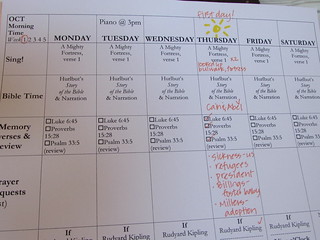
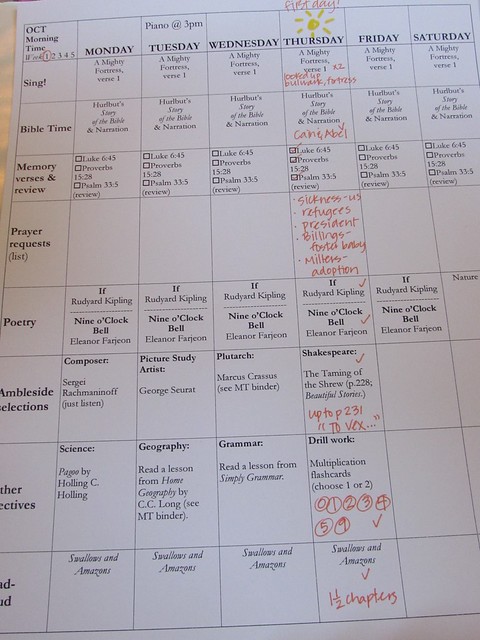
Here is our little Morning Time schedule for October:
(Note: Pretty much everything on the above schedule will change as we move in to other months in the school year (new hymn, new memory verses, new poems, new electives, etc.), but this has given me the needed format for plugging it all in.) I anticipate printing a new schedule for each month, and working from it.

The only change I made to our existing routine was to shift the kids' morning chore time, which had been after breakfast, to now be BEFORE breakfast. This means we can settle in together, first at the table over breakfast, then shifting into the living room (for the Ambleside selections, electives and our read-aloud) without interruption.

As I moved through our morning, I checked things off and made notes on my printed schedule with a colored pen.  (See photo below).  I know there will be mornings we don't get to all of these things, and I'm okay with that.  [For example, when my kids are sick, I always let them sleep in, and we start late those mornings.  Sometimes we have interruptions due to sibling squabbling or disobedience, and it can throw our whole morning.]  I think it will be so helpful for me to have this sheet I've been checking off throughout the week to have a visual of what's been done, so that I can think: "Okay, we've done our hymn 4x this week already.  We can skip that today to save time.

IMG_0656

We moved away from the breakfast table after poetry and resumed in the living room-- all sprawled out on couches and the floor-- for some Shakespeare:

IMG_0649IMG_0648IMG_0652

And then we ended with our read-aloud and finally some outside time. :) [Which is when I get time to make myself a latte!  ;)]

That's our plan for our mornings.  Next week sometime we'll add in independent work (math, history, copywork) for the older kids, more narrations, and my time with the little girls.  But I'm STILL planning all of that, so we'll get to that when it's ready.  ;)

Prequel to our first day

This year Ella is in eighth grade, Isaac is in sixth grade, Isaias is in fifth, and the girls are both in first grade.  The little girls are doing Ambleside Year 1, Isaias is doing Ambleside Year 4, and the older two are doing Ambleside Year 7.  

That's a whole lot of kids and a whole lot of lesson plans, and it was enough to make me feel pretty overwhelmed (read: lots of tears) when I told Mark two nights ago: "I don't even know how I'm going do this...") 

Because, I just know how this goes.  I know that when we start school, my plate goes from very full to HEAPING.  Everyone needs something from me at the exact same time (or just two seconds later), and on it goes all.day.long and it can just feel like too much.  And then I still sort of need to be mommy and get meals on the table and the laundry done and the house relatively clean and it's just a lot.

Going into this year, I fear that my older kids' books are too challenging, and that they won't enjoy their reading.  I worry that I will not be able to keep up with all the reading and all the narrations and the correcting.  I fear that I'll be stressed and overwhelmed and tired.  Oh, wait.  I will.  ;)

Mark listened and prayed for me.  I got some sleep, woke up the next morning and prayed and journalled.  I really just needed to talk to God about it all, and then I felt so much better.  I told Him that my desire is that we would learn in an environment of togetherness and interest and pleasure in whatever we're reading and learning; that there would be joy as we *get* to learn about other people and places and times and concepts.  I asked Him to teach me how to be a better teacher this year, and to be a better learner myself.  I asked Him to give me a spirit of joy, and that it would be contagious to the kids.  I asked him to help me to keep up with their readings and to ask good narration questions. I asked for wisdom with what direction I should take with the girls (individual time with each of them or together?  What to use for phonics/reading?  What time of day?)  I asked Him to cause all the pieces to fall into place and I asked for peace to reign in our home.  I asked Him to help me to use my time wisely (less Facebook, less computer time altogether, less shows that we watch too late when we should be sleeping).  I asked Him to help me not to live in a state of exasperation/stress, but to slow me down, give me a restful spirit and a joyful one, and to give me a "let's tackle this together" approach.  I asked Him to create discussions and connections.  Ultimately, I asked Him to lead us, because He knows us and He knows which books we will sink into and learn well from.  He knows our frames, our needs, our lives and interactions and challenges.  And after I'd unloaded all of that, I wasn't an emotional wreck anymore.  I trust Him to lead us faithfully as He always has.  And I'm truly looking forward to it all. 

Later that morning I stumbled upon a blog post that brought encouragement to my heart-- just that reminder that no matter what I've planned, if it's too much, we can pare it down until we get to a place of peace.  And that it's not about checking off the boxes and doing a certain number of books but about choosing a few, and doing them well

Confessions of a Second-Rate Charlotte Mason Educator

When people ask me what type of homeschooling we do, I generally ask them if they're familiar with Charlotte  Mason.  Usually no one knows who that is or has only a hazy recollection of hearing her name before.  So I end up briefly describing what a living book is, and just say that we do a lot of reading.  :)  Charlotte Mason simplified. 

While I identify with a Charlotte Mason philosophy of education, and I feel a kindredness with her approach, I feel like I am a looooong way from educating the Charlotte-Mason way.  So here are some of my "confessions", if you will:

I love Dictation and it truly works, but I think we did it all of four times last year.  For reals.

We didn't do any Shakespeare last year.  At all.

We aren't learning Latin or any other foreign language.  And- gasp!- I don't have any plans to do so.

We barely did Composer Study last year.  Occasionally I played some classical music while the kids were drawing, but truly that was probably only a handful of times. 

We do Nature Study, but we've never looked up or written down a Latin name for anything.  We just look.  And draw or paint.  And appreciate what we see.

I always feel like I'm cheating somehow when we do narrations.  I'm sure it's *supposed* to be more structured than it is, or more official, somehow.  And certainly it's supposed to happen more regularly than it does.

* * *

I read a few homeschooling blogs, and I sort of marvel at how organized and how "together" these moms are, how they have such great CM systems; how intentional they are about implementing Charlotte Mason's methods, and how they put out such coherent, regular, thoughtful homeschooling posts.  And I conclude that they are doing this Charlotte Mason thing The Right Way, whereas apparently I am only dabbling, because what I do doesn't resemble what they do, or at least it doesn't seem quite as polished. 

But you know what?  I'm actually okay with that.  That is them, and that is not me.  I don't fret about it like I used to.  The longer I homeschool, the less anxious I am about those things.

Some things we do well some years. 

For two years straight we did do Shakespeare.  Six plays.  And we enjoyed it.  We plan to cover some more plays this year.  Regardless, when all is said and done, I have introduced my children to Shakespeare, and I think that's a good thing.

Some things will always be a struggle.  I don't think we'll ever learn a foreign language, and I'm okay with that.  Would I love it if my kids knew a second language?  Um, YES.  But it's not really in my wheelhouse or in our budget and I trust that if God wants them to learn one someday, He will make it happen. 

I'm okay with the way we do Nature Study.  Of course I have lofty visions of beautifully drawn flowers and plants and trees and insects and animals, with corresponding Latin names calligraphied perfectly beside my drawings, but it's just not going to happen.  And that's okay.  Overall, I know that my children notice things around them when they are outside.  They have gained an appreciation and a curiosity of nature.  They notice what blooms and when, and they want to draw a picture.  They  take the time to watch bugs and spiders and examine their behavior.  They delight in what they see; and in what God has made and in how He has created.  That's a great thing.

I may not do narrations right, but my kids remember well and love to tell us about what they've read.  So they are taking in the information, processing it, and retelling it.  That's enough.

I say all that because I began this post with the idea to tell you about an inspiring book I'm reading about educating the Charlotte Mason way.  (I try to read at least one homeschool-related book each summer for the purpose of fresh inspiration.)  And as I began writing about it, I recalled the book I'd read last summer-- The Living Page.  I realize that as inspired as I was after reading that book, as many notes I took and plans I had, our homeschool really didn't change a whole lot as a result.  (I think it changed me in that I paid more attention to what I was reading and have been more faithful to write things down in my journal and label them "commonplace".  And I created a Word Book for the girls and we used that throughout the year.)

But with all my lofty plans of wonderful historical timelines and a firsts notebook and all the other notebooks we were going to start, and maintain?  None of that materialized.  I think some of that is due to my lack of planning.  Or more accurately, my lack of follow-through.   I can be visionary and get easily excited about things and begin well, but I don't always finish.

Or maybe it just wasn't our year to excel in notebooks and timelines.  :) 

Part of the reason, too, is that there is just not time to do it all.  There are five children in this house (!!!!)  Things can be quite crazy around here.  (Just ask my friends who were here recently when my daughter was having a tantrum on her bed.  Screaming and kicking the wall.)  These things happen in our regular life.  There are days we skip whole subjects entirely because we just cannot even.

And yet, the school year happened and we learned.  We grew in knowledge alongside each other and we lived the firsts together and we marveled over connections made through our different readings and we are doing just fine.

This year we will grow and learn alongside each other, too.  And I will delight in my kids' learning.  I will pray and ask God to lead us in our learning endeavors.  And He will.  I will be thankful for the relationship I have with each of my kids, and for the privilege of getting to teach them. 

ps: I may yet tell you about that book, but before doing so I felt I should tell you how imperfectly we'll live out any inspiration I may derive from said book.  :)

History narrations

One of my goals for this school year-- well, for every school year- was to be more diligent in history narrations.  It has really been a good thing for all of us, and and here are a few things I like about it:

1. It requires that I know what they're reading, so that I can know if they are narrating well.  And I have found that I love reading along with them as they're learning these things.

2. It requires me to stop and truly pay attention.  No mmhmm-ing while I'm busy doing something else.  I have to really tune in to what they're saying.

3. My kids- especially my boys- LOVE it.  They get to have my undivided attention and talk and talk and talk.... ;)  (In fact when I first handed out their history lesson plans, Isaac read weeks ahead, which is a lot of reading.  I finally told him that he needed to stop, because I really didn't have time to listen to him narrate for that many hours.  ;)

I think doing history narrations has its challenges, too, the main one being that it requires quite a bit of that listening time on my part.  If all three of my kids are doing history on the same day (and they are, twice per week), and they are all reading from a few different books, that equates to a lot of narrating. 

One of the ways I addressed this is that I've assigned drawn narrations for one of their books (The Story of the Greeks).  The chapters/stories are fairly short and easy to narrate with a single picture, so I printed off some of these free printable pages.  Now instead of telling me all about this book with their words, they get to do it through drawing, which they love.  :)  Win-win.  :)

IMG_0820
Some of Isaac's drawings

History and Journaling, all in one post.

Hello friends,

Happy Friday to you.  :)  On Friday mornings my beloved mom takes the kids for a couple of hours so that I can have some time to myself.  (What I look forward to on Fridays is the quiet.)

Often I'll just stay home, clean the kitchen, make myself some coffee, and sit with my Bible and journal.  Sometimes I run errands.  Today I went to the bank, then dropped a bag of clothes off at the consignment store, and then drove out to Old Navy to make a return.  Then came home to clean the kitchen.  :)  I printed out some schoolish things I've been meaning to,  and now I have some time here to write.  :)  (Oh!  And I finally snapped some pictures of my journal so that I can show you a bit of it....)

First: History.  This year Ella and Isaac are both doing Ambleside Year 6.  I've recently decided to read what they're reading, so that I can track their narrations better and learn for myself, too.  We're currently reading Augustus Caesar's World, The Story of the Greeks, and Genesis: Finding our Roots.  I find it really hard to read history without taking notes of some sort, so in a blank journal I've been taking notes and doing some drawn narrations as I go.... really simply, like this:

IMG_0760

And here are some snapshots of my journal.  I haven't been cutting out many (any?) things out of magazines like I used to, (mainly because Barnes & Noble stopped carrying my favorite magazine)  but I'm having fun nonetheless:


IMG_0762
first page of my current journal
IMG_0765
on a day when I took the kids down to Boulevard for nature study & cocoa
IMG_0764
IMG_0767
I even documented our bout of influenza!  ;)
IMG_0769
IMG_0770

*This post contains affiliate links

Keeping | Nature Study Journals

Whenever we sit down with our nature journals, outdoors or indoors, I think "Why don't we do this more often?"  We love this.

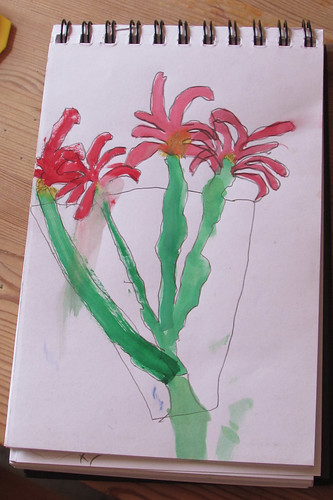
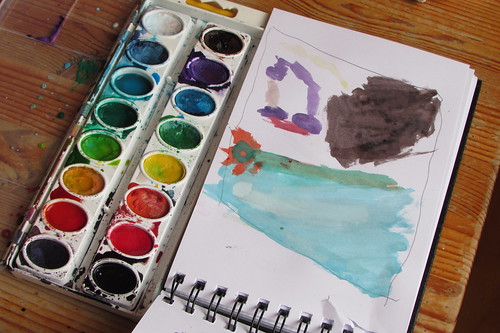
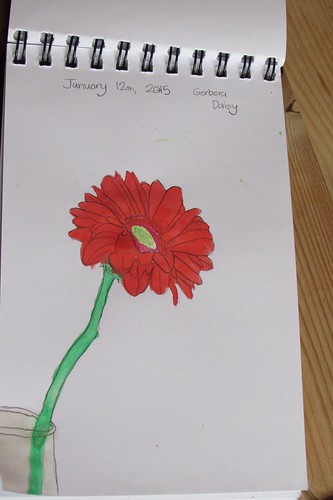
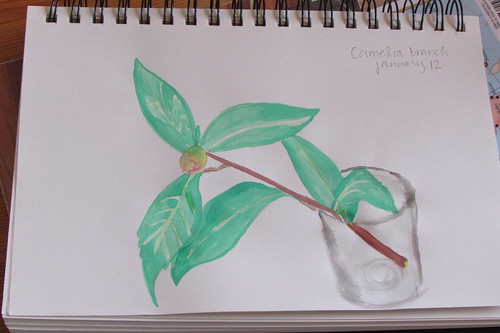
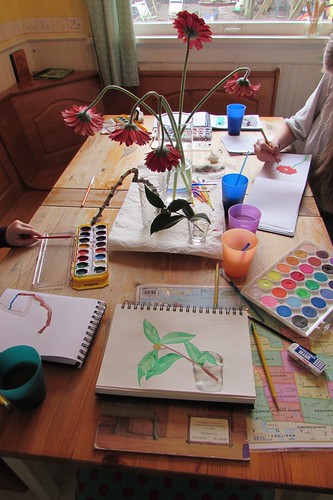
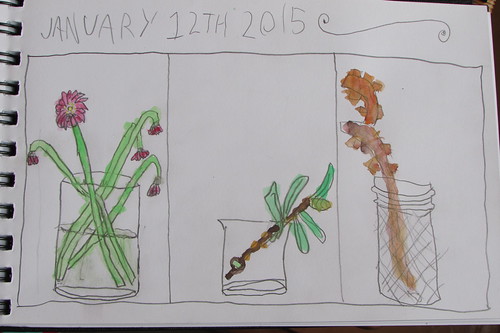
Last week I grabbed a vase of flowers, a stick from the yard, and a snipping off of our camellia tree, set them all in the middle of the table, and we painted.  Well, they painted while I read aloud, and then I joined them when I'd finished the chapter and they were still working.  ;)


IMG_8140

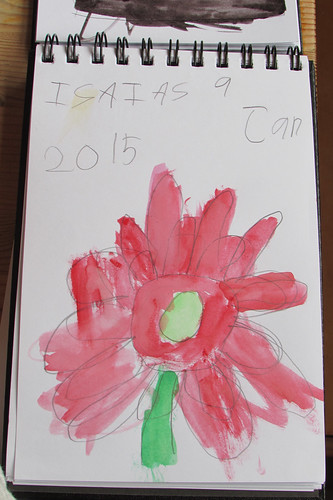
This one is from my five-year-old:

IMG_8142
and this, from my six-year-old:

IMG_8145
I was so proud of her because sitting still is nearly impossible for her and she generally lasts about a minute during any crafting time.  But she painted!  And look: you can even make out a flower there on her page.  :) 

This next one is from my nine-year-old:

IMG_8148

and this, from the eleven-year-old:

IMG_8146

This one is Ella's (age 13):

IMG_8151

Finally, here's mine.  (Don't look too closely, though, because I misspelled Camellia when I first wrote it.  I've since changed it but this picture bothers me because of the typo.  ;))

IMG_8152

*
Linking up with Celeste at Joyous Lessons
 

"My Word Book"

"Tommy's new words are written in his 'note-book' in print hand, so that he can take stock of his possessions in the way of words." ~ Charlotte Mason 
Mason goes on to describe that these are words the child knows and is able to "pounce upon anywhere".

That quote from Charlotte Mason, recalled to me through Laurie Bestaver's book The Living Page is what made me want to put together some sort of Word Book for the little girls this year.

It was a scene from a movie, though, that gave me the inspiration for what those books might look like.

{ photo from the movie The Book Thief }
In The Book Thief, (an excellent movie based on the book), Liesel is captivated by books but doesn't yet know how to read.  Her adoptive father immediately recognizes this and creates a word bank of sorts for Liesel in the form of a chalkboard wall that wraps around their basement.  As Liesel learns a new word, she runs downstairs and carefully writes her new word upon the wall.  It was a good visual to me of someone taking "stock of his possessions in the way of words."

IMG_7189


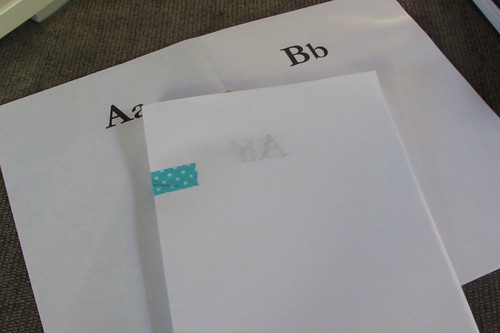
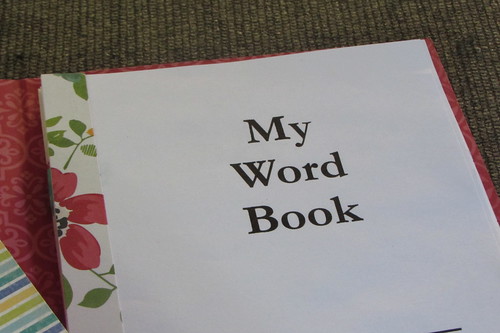
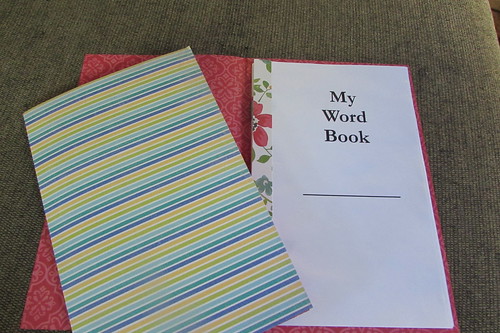
Armed with my computer, a classic typeface, our printer and some scrapbook paper, I made "My Word Books" for my pre-reading girls, ages 5 and 6.  (Remembering my book-binding class from college, I also sewed the pages together and taped over the remaining thread, though it's not a necessary step.)

Ta-da!
IMG_7191


IMG_7190

My plan is that as they learn new words throughout the course of our school year, we'll pull out their little books and they will carefully copy down the words they now recognize.

For now, they've just copied down everyone's name in our family.  :) 

IMG_7681
Audra's word book
Perhaps you're not of the mind to sew together pages and don't have years of scrapbook paper on supply as I do.  No problem!  You could easily make one buy buying a blank book (Moleskine, perhaps?) and a set of alphabet stickers and you're set!

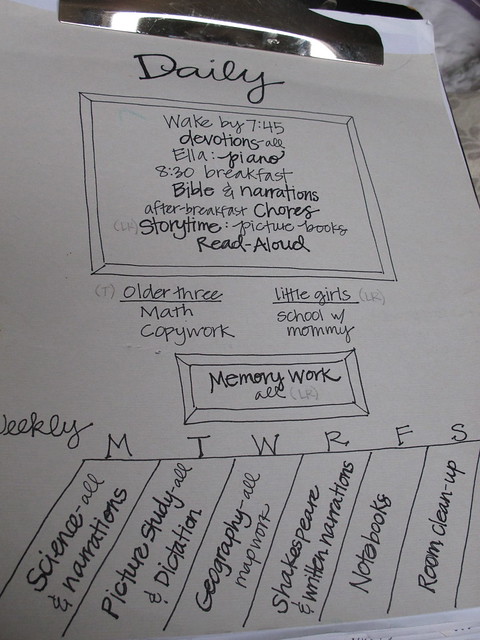
Our Simple Schedule: Part 4 (Geography, Science, and Written Narrations)

IMG_6105_2

This is Part 4 (and the final post) in an impromptu series I'm doing in response to a readers question about our schedule.

Here is her question:  
I know this was a while back, but I really love the simplicity of that schedule you shared (the picture in the other post of your school schedule). I'm curious what resources you're using for things like math and dictation (are you using Spelling Wisdom or just choosing something each week, etc.). Anything in particular for Bible, memory, poetry, etc or just choosing as you go? What about geography and science? And, written narrations ... are you just letting Ella choose what she will write from? Thanks so much! You really know how to simplify and make it feel calm (or at least appear that way). :) 
Here is what we've covered so far:
Part 1: Math
Part 2: Dictation and Spelling
Part 3: Bible, memory work, and poetry

And in this post we'll cover geography, science and written narrations.  So.  Geography.  Mark is really much more into geography than I am, so I asked him to make our lesson plan last year.  He made a GREAT one, having the kids draw world maps, label oceans, continents, rivers, mountain ranges, etc.  They loved it.  Then he moved to local geography, then back to each continent for a closer look.

We started well and then faded into nothing.  TOTALLY my fault.  And really more of a management thing- he had the lesson plans on the computer, I never printed it out or had it with me, or I'd look and be confused about what I was supposed to do so we just ended up skipping it a lot of times.  :(  Which just means we'll be doing some repeats this year.  Fine by me.  I plan to be much more organized- everything printed out and ready to go and discussed with him beforehand.

Science.  We've spent years doing only nature study and we love that--  examining things growing and living around us, drawing, labeling, and reading about them.  This past year I thought we should maybe explore other science stuff so I ordered an Apologia book and we did that once per week, in addition to nature study.  I didn't really like the textbook approach, although we all liked the information we learned.  Generally I would look ahead, print out some coloring pages (specific to whatever animals we'd be reading about), and the kids would color while I read aloud.  I'm still undecided about what we'll do this year.  I just ordered this book--


-simply because it seems right up our nature-study-alley, and I thought it might give us some fresh inspiration.  We'll decide soon what science will look like next year, but I'm leaning more toward a nature study approach again.

Written narrations we do once a week- and again, much like dictation, I select a passage from one of our books: whatever we're reading at the time (history, read-aloud, one of the kids' own books, Shakespeare, etc).  I read it aloud ONCE while they listen, and then they summarize it for me in written form.  If there are places or names that are unfamiliar to them, I will put them up on the dry erase board for them.

I am ALWAYS surprised by how much they write.  I expect a paragraph, and they will easily give me a page to a page and a half.  I love reading these narrations.

A written narration requires a bit of time (about half-hour) and little to no interruptions, so honestly?  I skip this more than I'd like to admit, because it's just difficult to have such quiet around here!  But that's how we do it when we do it!

***

Next up:  School Planning 101


Our Simple Schedule, Part 3 (Bible, memory work, poetry)

IMG_6105_2

This is Part 3 in an impromptu series I'm doing in response to a readers question about our schedule.

Here is her question:  
I know this was a while back, but I really love the simplicity of that schedule you shared (the picture in the other post of your school schedule). I'm curious what resources you're using for things like math and dictation (are you using Spelling Wisdom or just choosing something each week, etc.). Anything in particular for Bible, memory, poetry, etc or just choosing as you go? What about geography and science? And, written narrations ... are you just letting Ella choose what she will write from? Thanks so much! You really know how to simplify and make it feel calm (or at least appear that way). :) 
Here is what we've covered so far:
Part 1: our resources for math
Part 2: what we do for dictation.

And in this post we'll cover Bible, memory work and poetry.

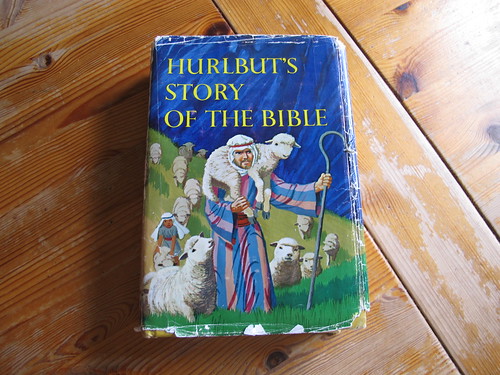
IMG_5376For Bible time: Every morning over breakfast we read from Hurlbut's Story of the Bible.  [Another favorite is Catherine Vos' The Child's Story Bible].  About 80% of the time we follow our reading up with a narration: the kids tell it back to me, or I have them draw a picture, or we'll make lists on the dry erase board (observational- listing characteristics of someone, or of God, or of what this or that king did in comparison to another).  Every once in long while I'll have them act a story out, which they love, but which takes a really, really long time.

Mark also reads from the Bible (NIV) in the evenings before bed, before or after our read-aloud.  He started this habit years ago when we only had Ella and Isaac.  Sometimes he only reads a few verses and we talk about it, sometimes he reads a whole chapter.

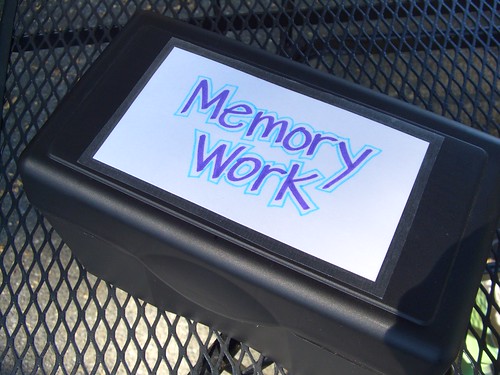
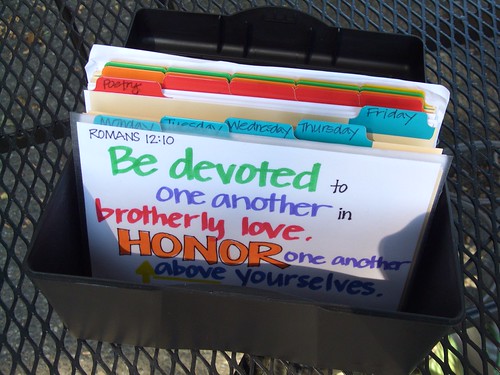
For memory work,  this year I transitioned from our memory work box, which we'd used for years, to binders (shown in this post) for each child containing all of our memory work.  Honestly, I sort of miss our memory work box and I still can't decide which we'll do this coming year.   The box is more portable and practical, and we could easily do it at the table, and it held an all-togetherness factor that I like.

CIMG5743

CIMG5744

The binders made for more copying and more papers.  And while I liked that the kids got to have their very OWN, I think we did it less because we had to move from the table to the living room for memory work.  (Because five open binders at our table, usually with breakfast (or the remains) on our table, is impossible.)

What we did for memory work this year: our Family Ways.  Mark and I used this as a springboard to make our own family ways.  We used many of theirs but tweaked it a bit- adding some different verses, omitting a few and adding some of our own.  So we introduced them week by week and discussed them, and then memorized verses to go with them.  We also memorized Psalm 19.  And we reviewed our previous memory work, listed below:

-ABC Bible verses
-Catechism questions
-OT books of the Bible
-NT books of the Bible
-the Ten Commandments
-assorted Bible verses/passages we've memorized over the years
-a couple of poems

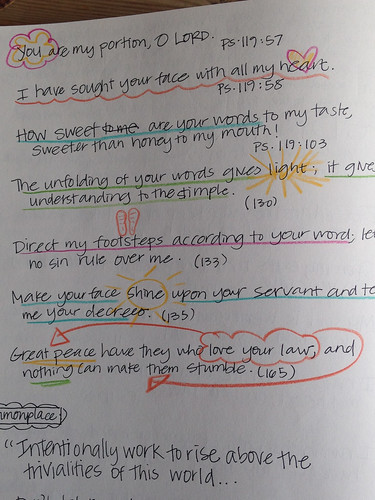
For poetry, what I did last year was to choose one to three poems for each month- specific to the month or season, and tried to read through them at least once each week.  My plan* was that the kids would then choose one poem per quarter that they would then memorize and recite.
*I am really quite good at making plans and systems and thinking they're going to go along swimmingly, right up until they don't.  So while that was my poetry plan, what really happened is that we read the September, October and November poems, and the [3 older] kids each chose a selection from them and memorized them (roughly), and kept asking, "When are we going to recite our poems, mommy?"  And I said, "I don't know.  Let's ask daddy sometime."  Repeat about 20 times over the course of a couple of months. One day I did, finally, ask them to recite them to me.  And they did.

We don't school for the month of December, so no poems.  I also miscarried that month, and we were very sick.  While we began school up again sometime in January, I don't think we ever read the January poems I'd selected.  I read February's poems at least twice, March's poems once or twice, April's poems once, May's poems once, and June's poems never.  
I was bemoaning to Mark the other night that we would have gotten far more poetry done if I would have just chosen a book, set it somewhere close to our kitchen table, and picked it up and read from it each day.  

Next up: Part 4: Geography, Science and Written Narrations.  Then I'm going to write a few posts on how I plan for our upcoming school year, since that's what I'm doing these days.